Centered in Appalachia, the southeastern region of the United States holds more freshwater fish diversity than anywhere else in the temperate world. In our rivers and streams, a vast array of species, spanning numerous taxonomic groupings, have diversified into an equally vast selection of shapes and colors.
Here, I've collected images taken along the full length of the Appalachians, from Maine to southern Tennessee.
During spring, many species don brilliant spawning colors, rivalling tropical reefs in spectacle. Some species, primarily chub of the genus Nocomis, build elaborate nest mounds in which they deposit their eggs. Numerous other species have evolved to take advantage of these mounds for their own progeny. These species are called "nest associates," and their swarms are some of the most spectacular events that most naturalists have never heard of.
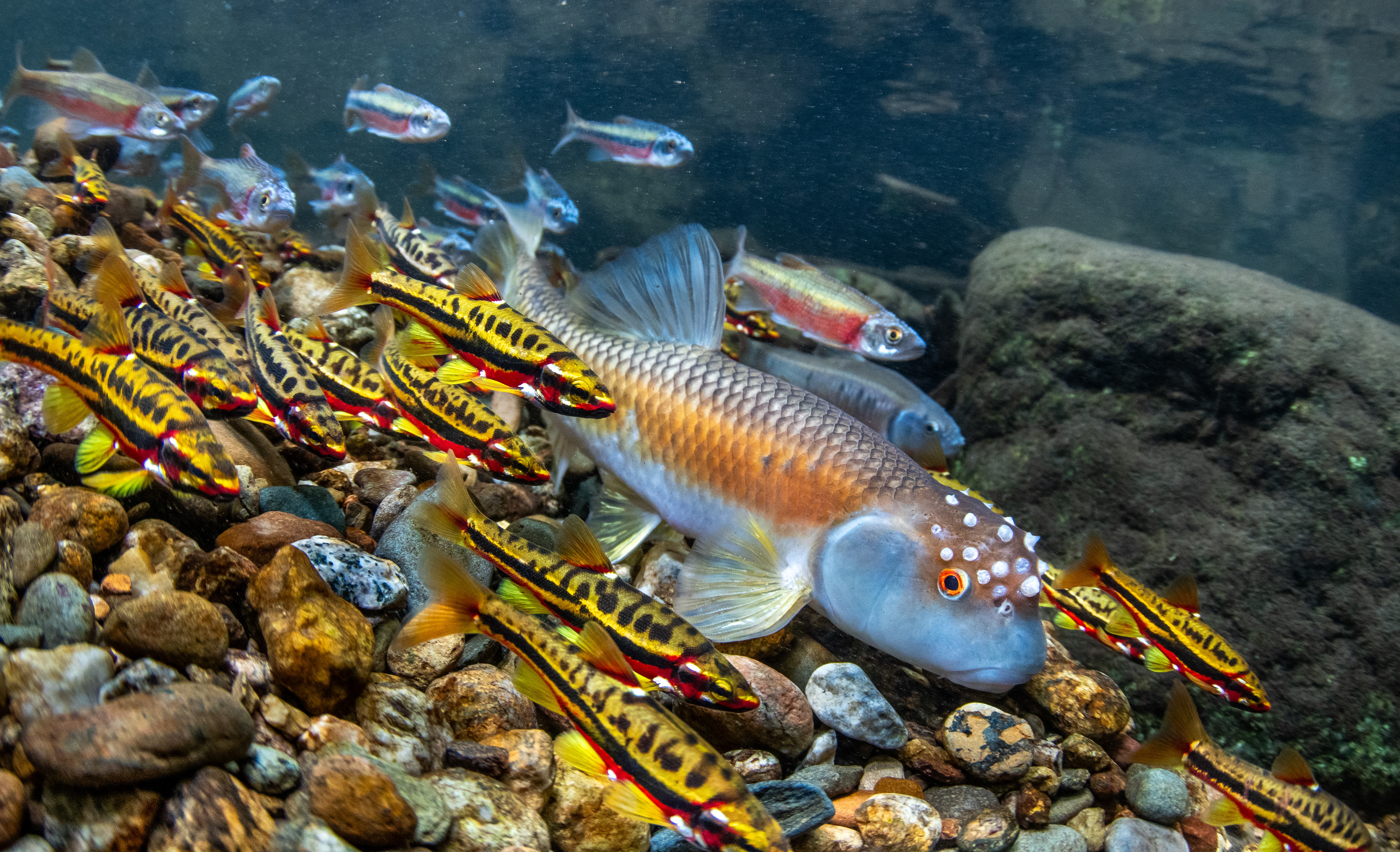
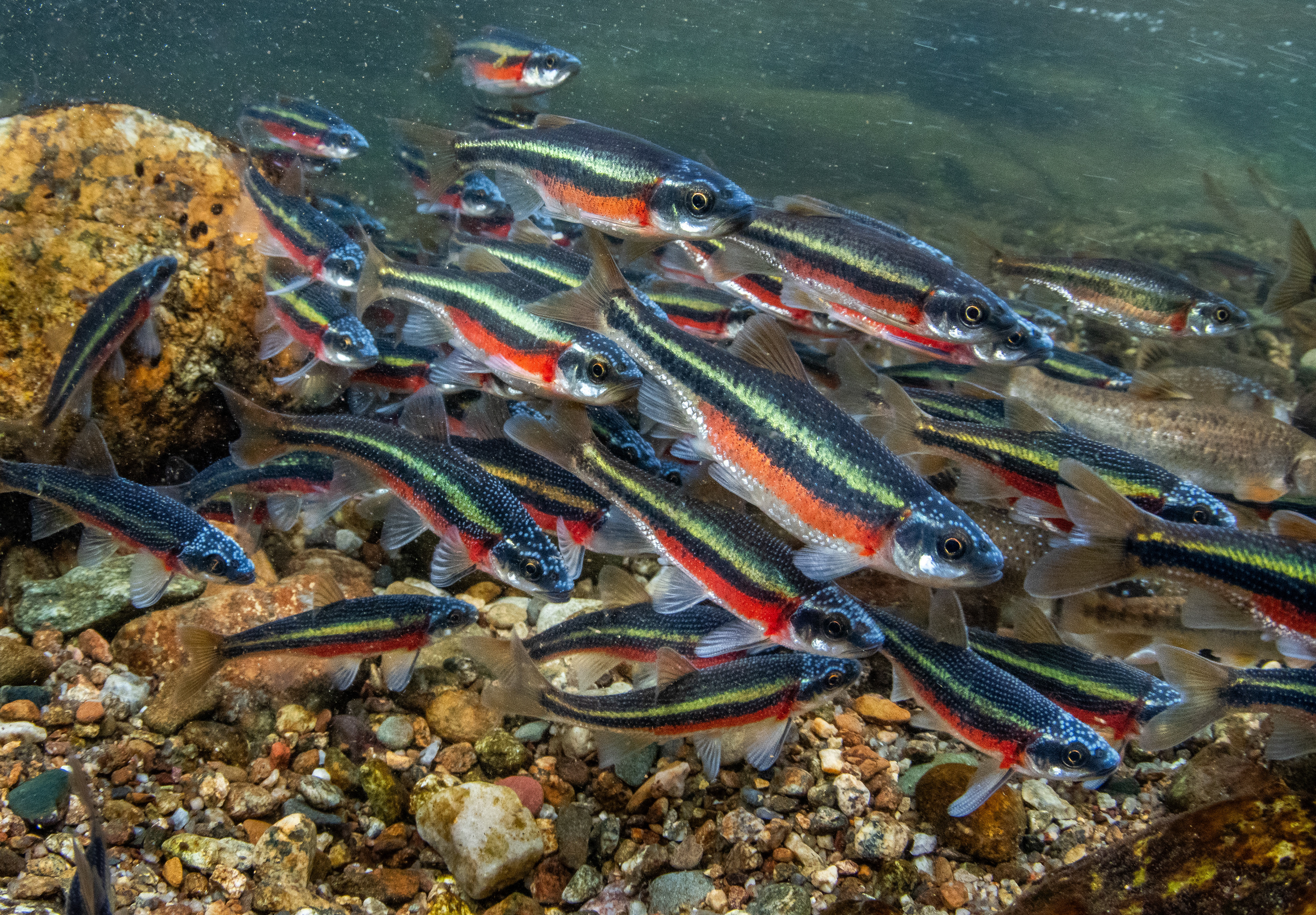
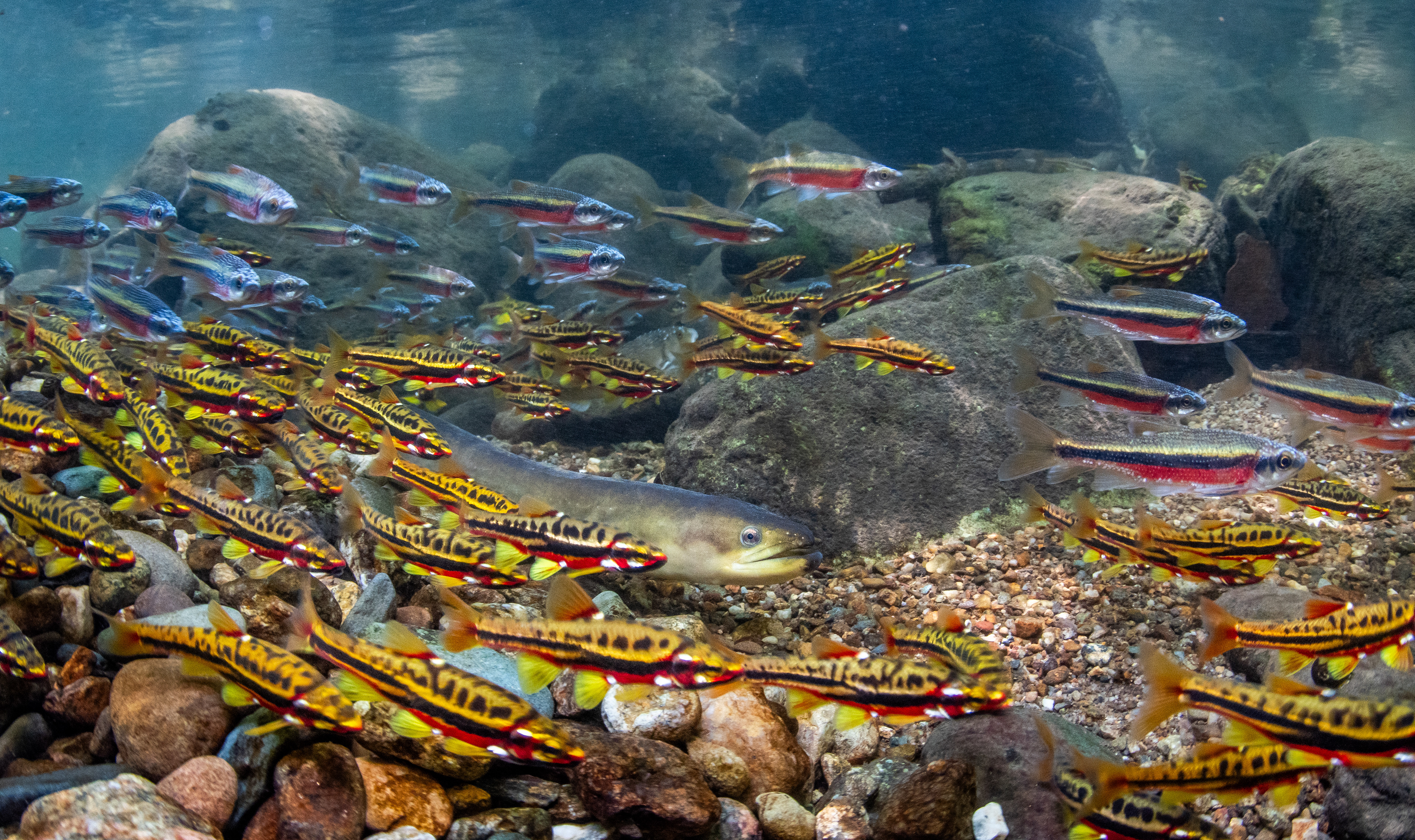
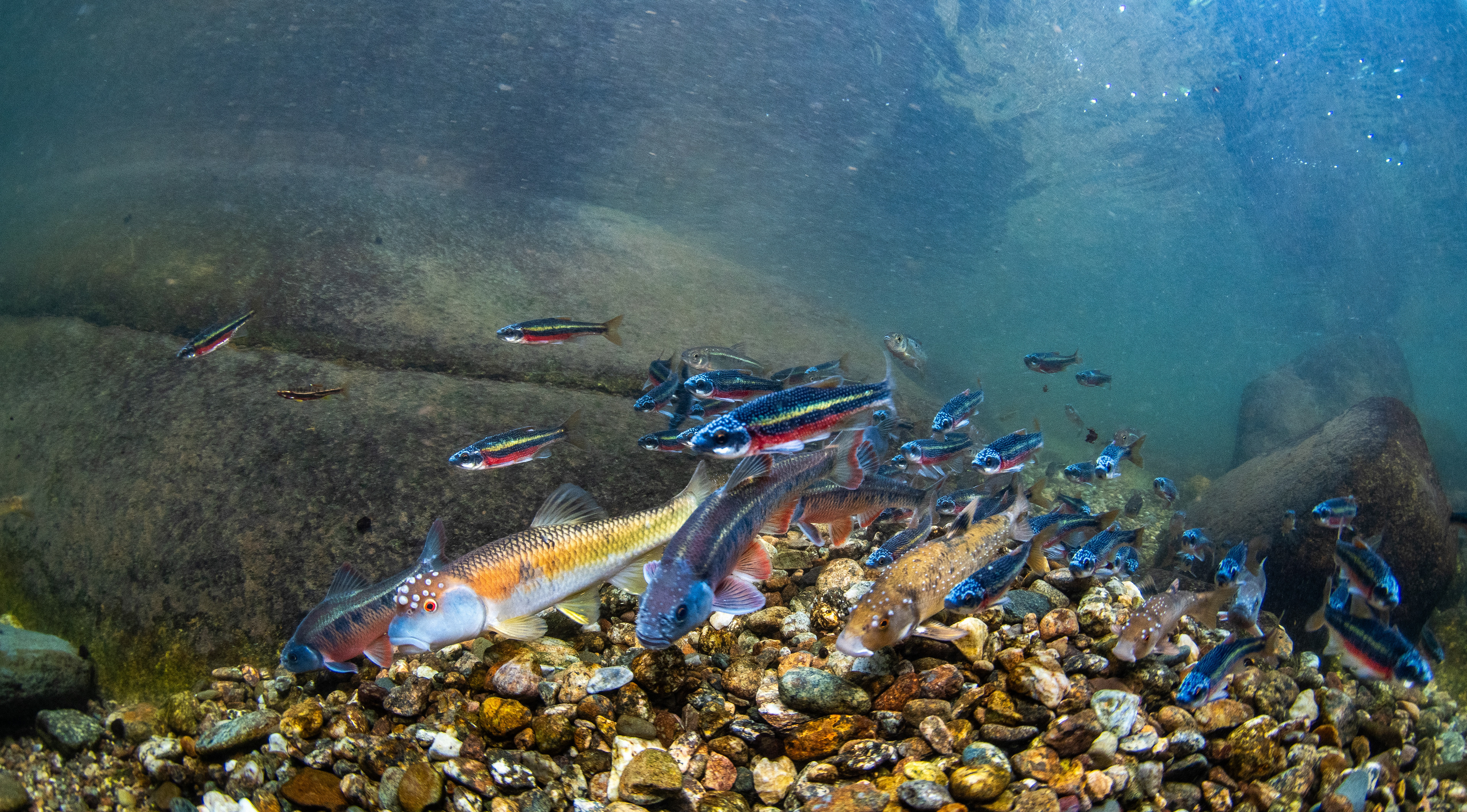
Rosyside dace (Clinostomus funduloides) swarm the nest pits of central stonerollers (Campostoma anomalum), seeking to deposit their eggs alongside the diggers'.,
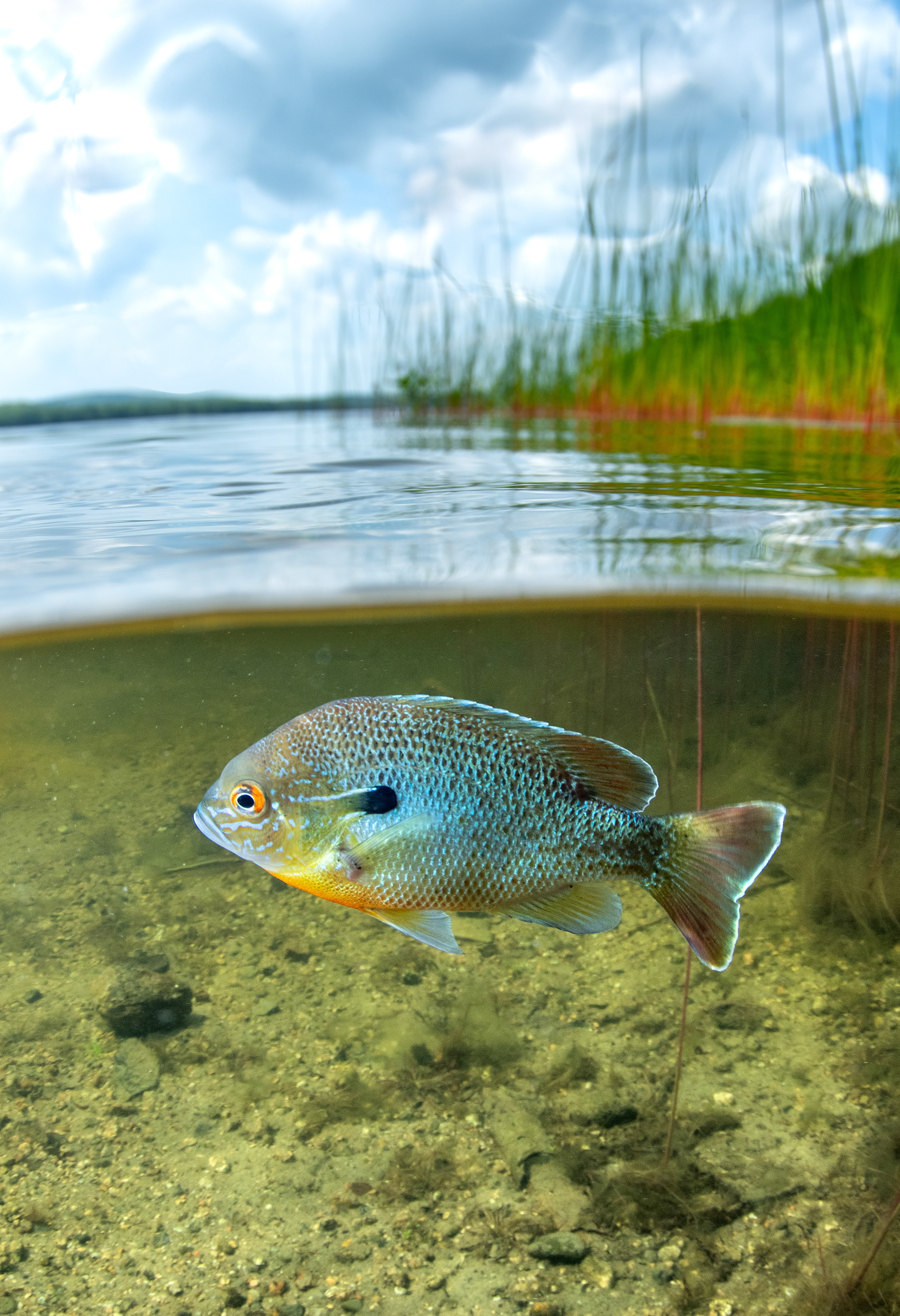
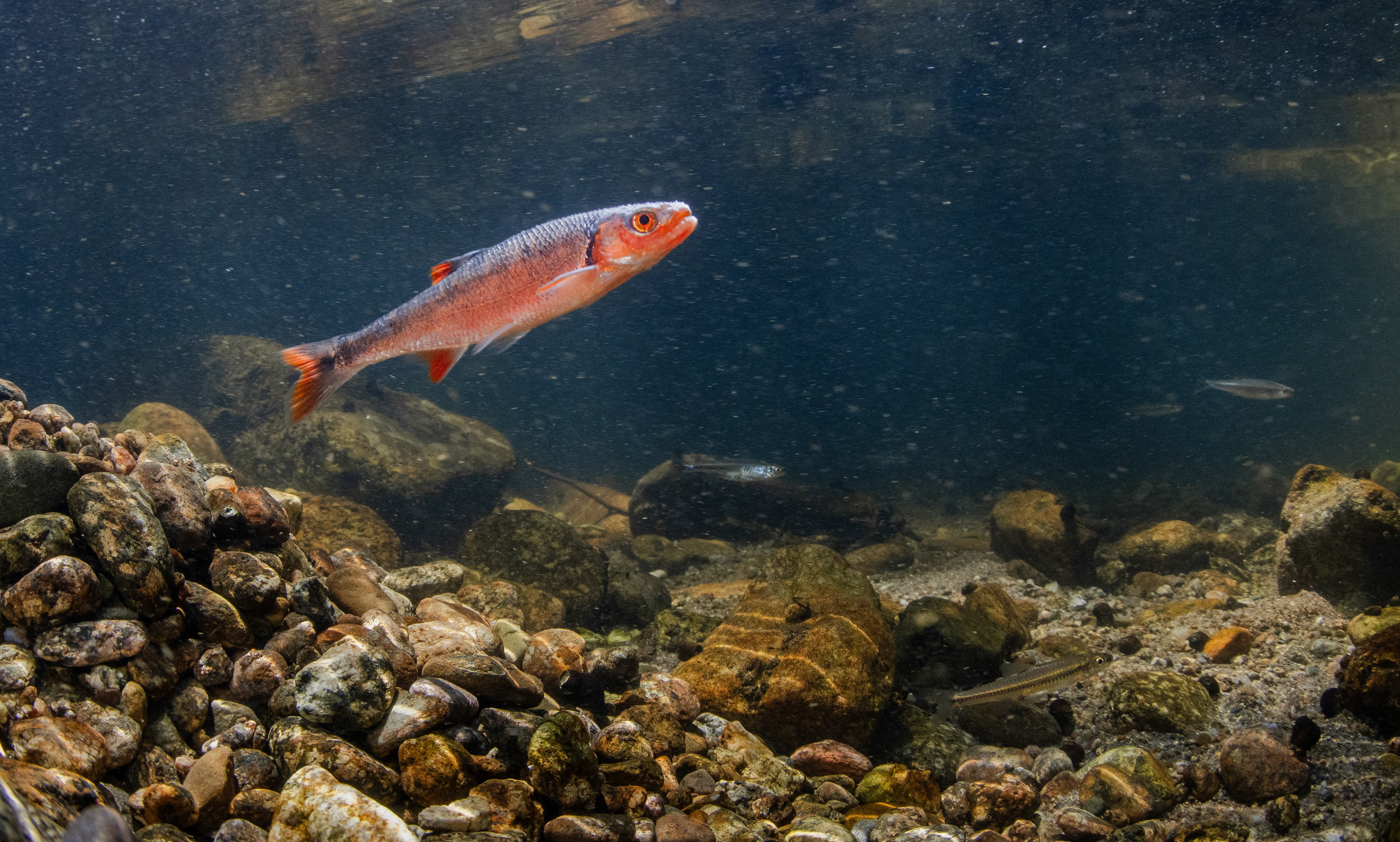
A redbreast sunfish (Lepomis auritus) eyes the camera curiously in a Maine lake.
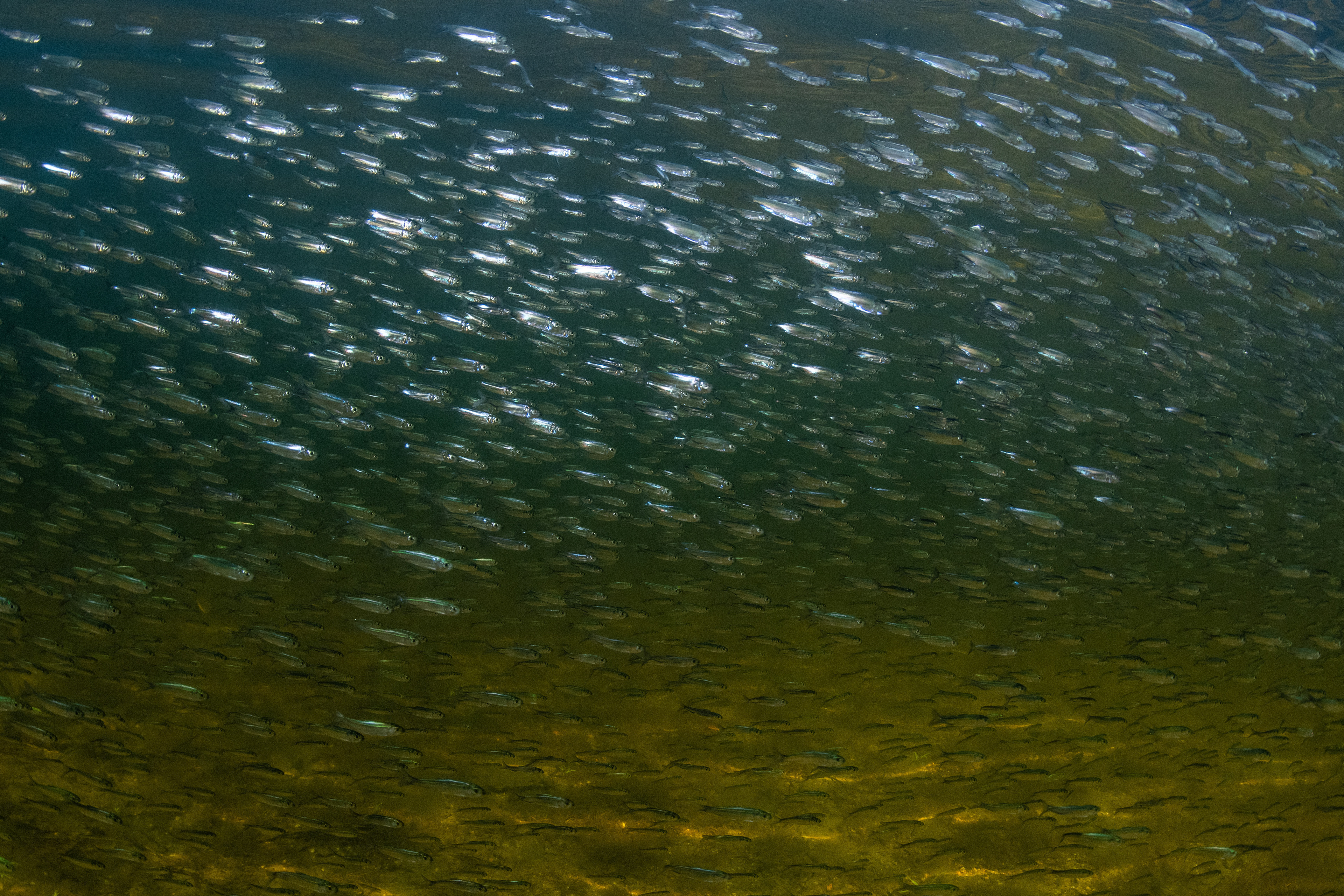
A shoal of young alewives (Alosa pseudoharengus) in a Maine lake.
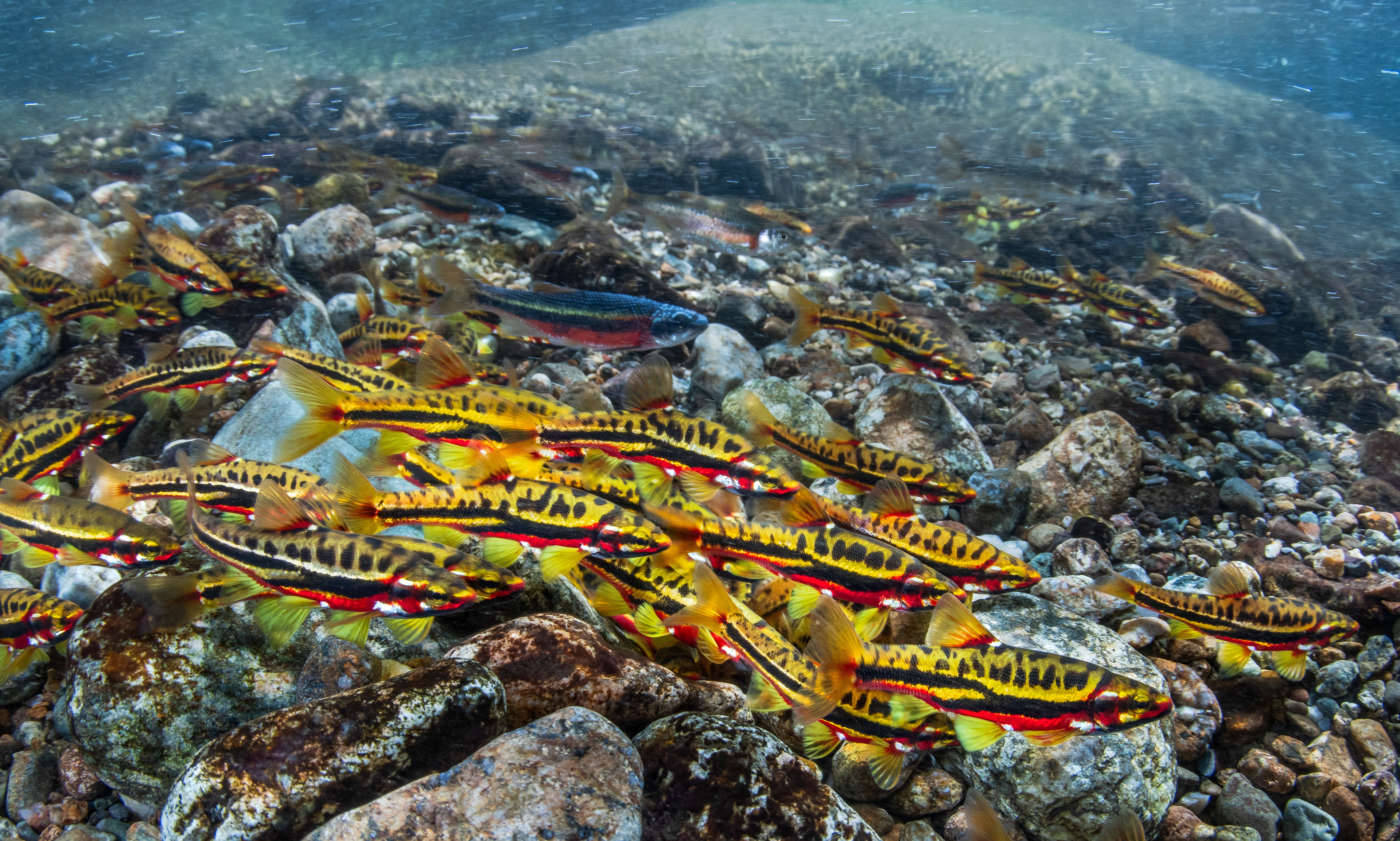
Mountain redbelly dace (Chrosomus oreas) swarm the nest pits of central stonerollers (Campostoma anomalum), seeking to deposit their eggs alongside the diggers'.,
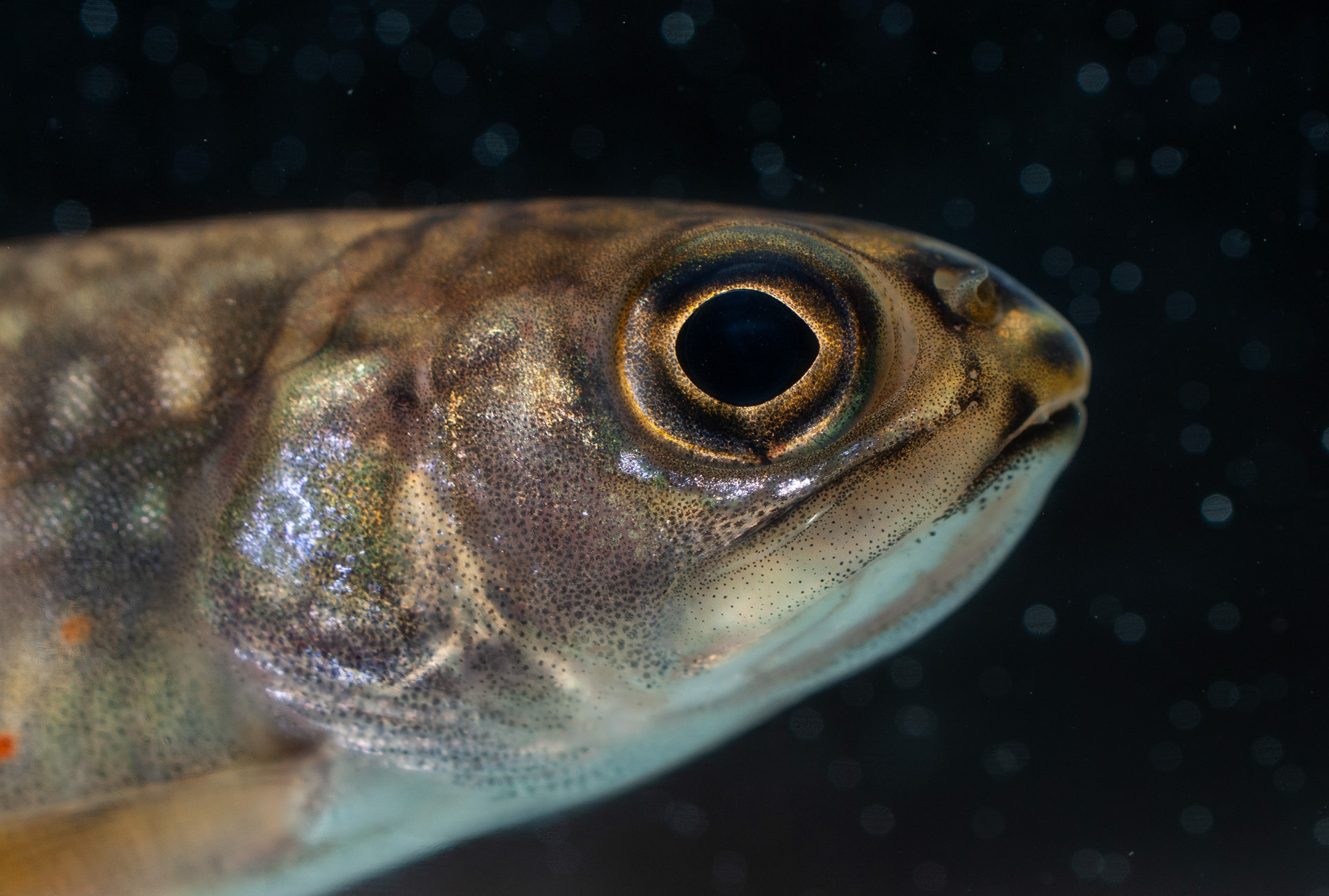
Portrait of a brook trout (Salvelinus fontinalis), the only native trout variety in the American southeast.
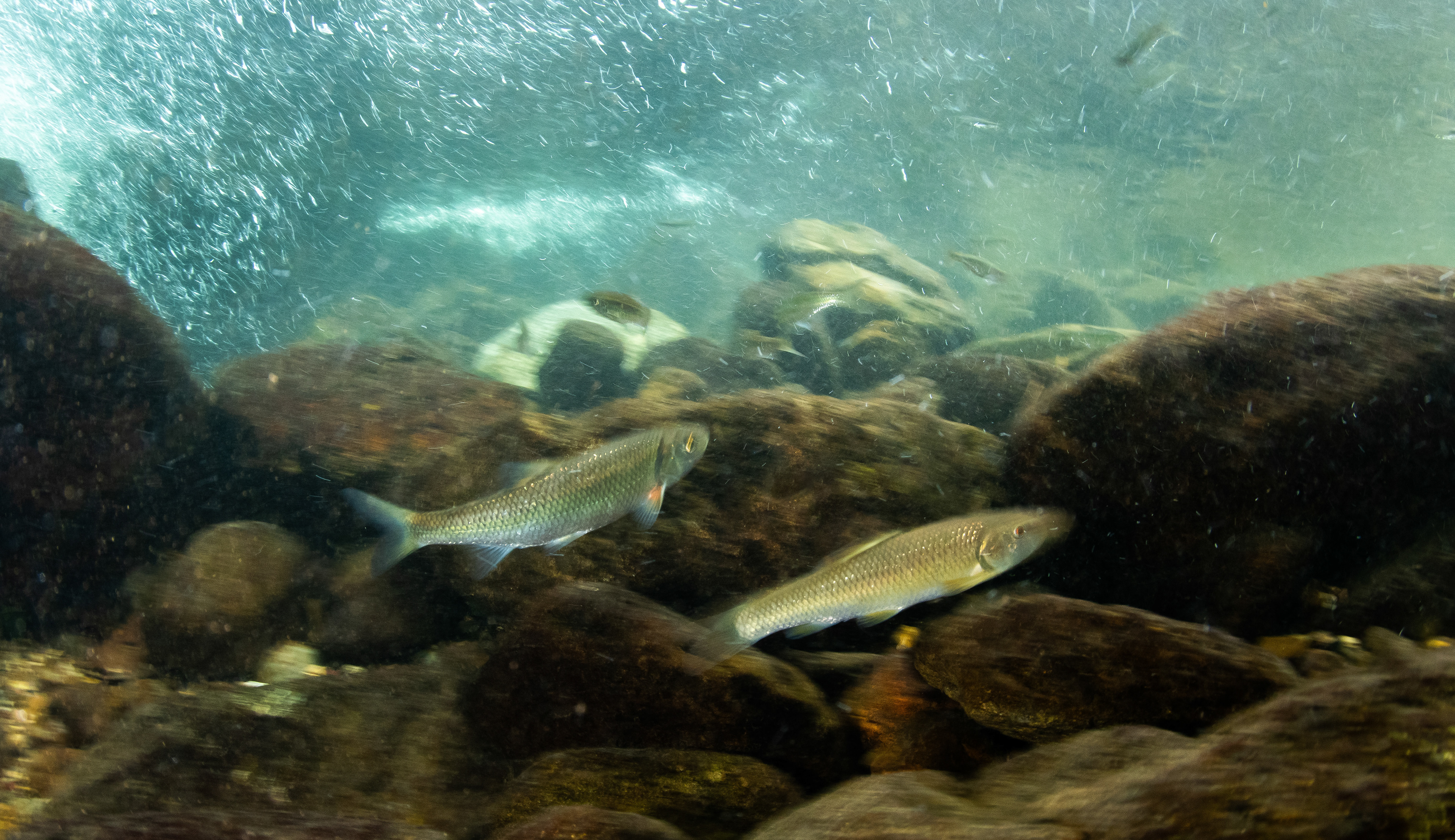
A fallfish (Semotilus corporalis) and a bluehead chub (Nocomis leptocephalus) dart through a mountain pool.
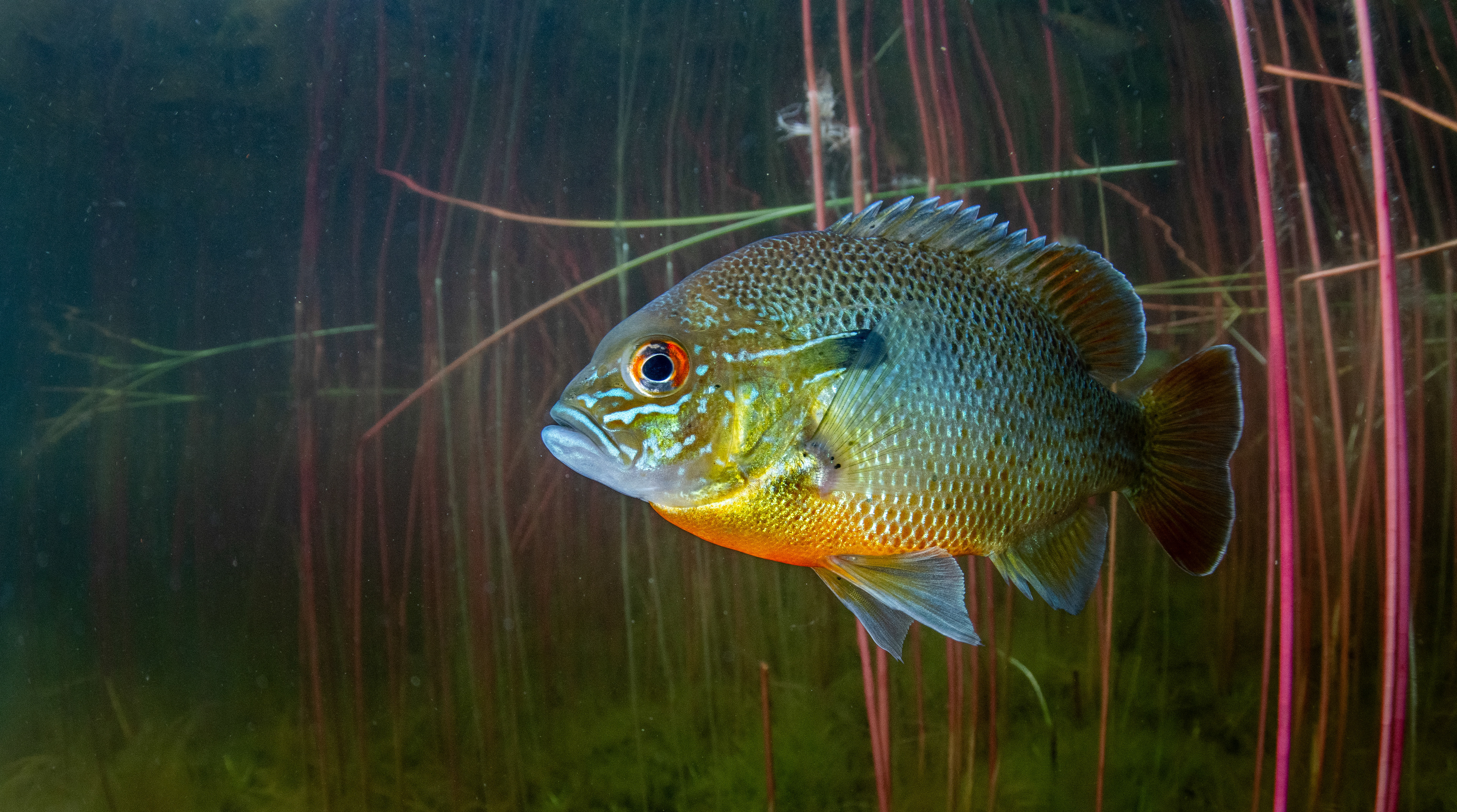
A redbreast sunfish (Lepomis auritus) eyes the camera curiously in a Maine lake.
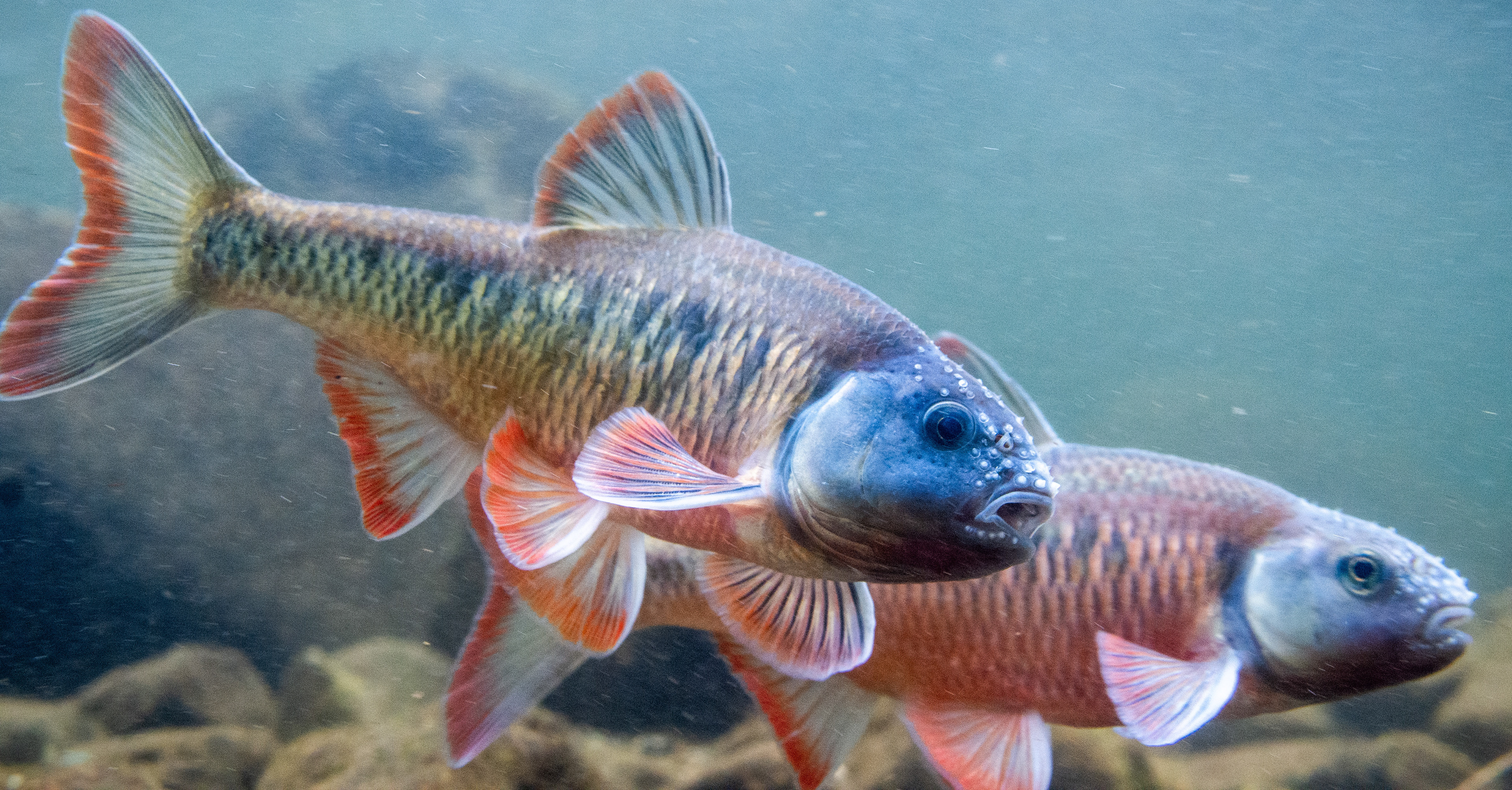
Male common shiners (Luxilus cornutus) spar for spawning rights over the nest mound of a bluehead chub.
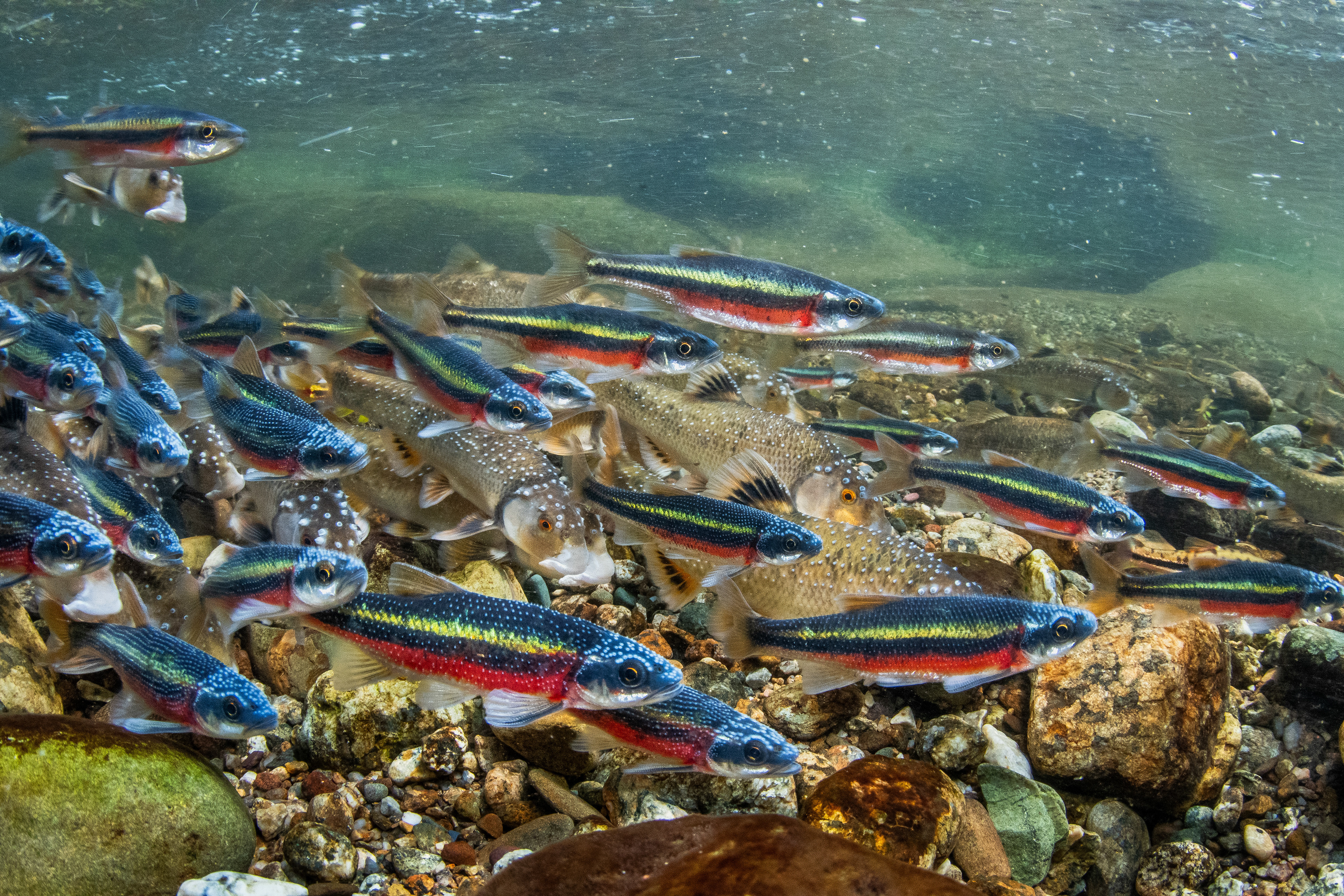
Rosyside dace (Clinostomus funduloides) swarm the nest pits of central stonerollers (Campostoma anomalum), seeking to deposit their eggs alongside the diggers'.,
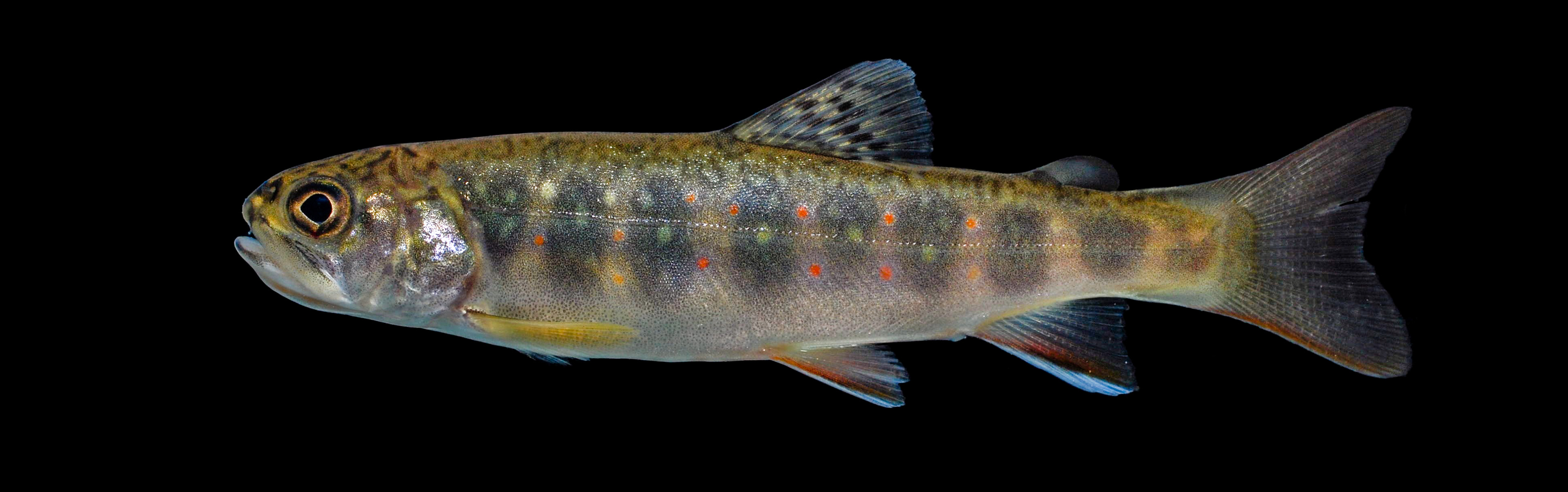
Brook Trout (Salvelinus fontinalis)
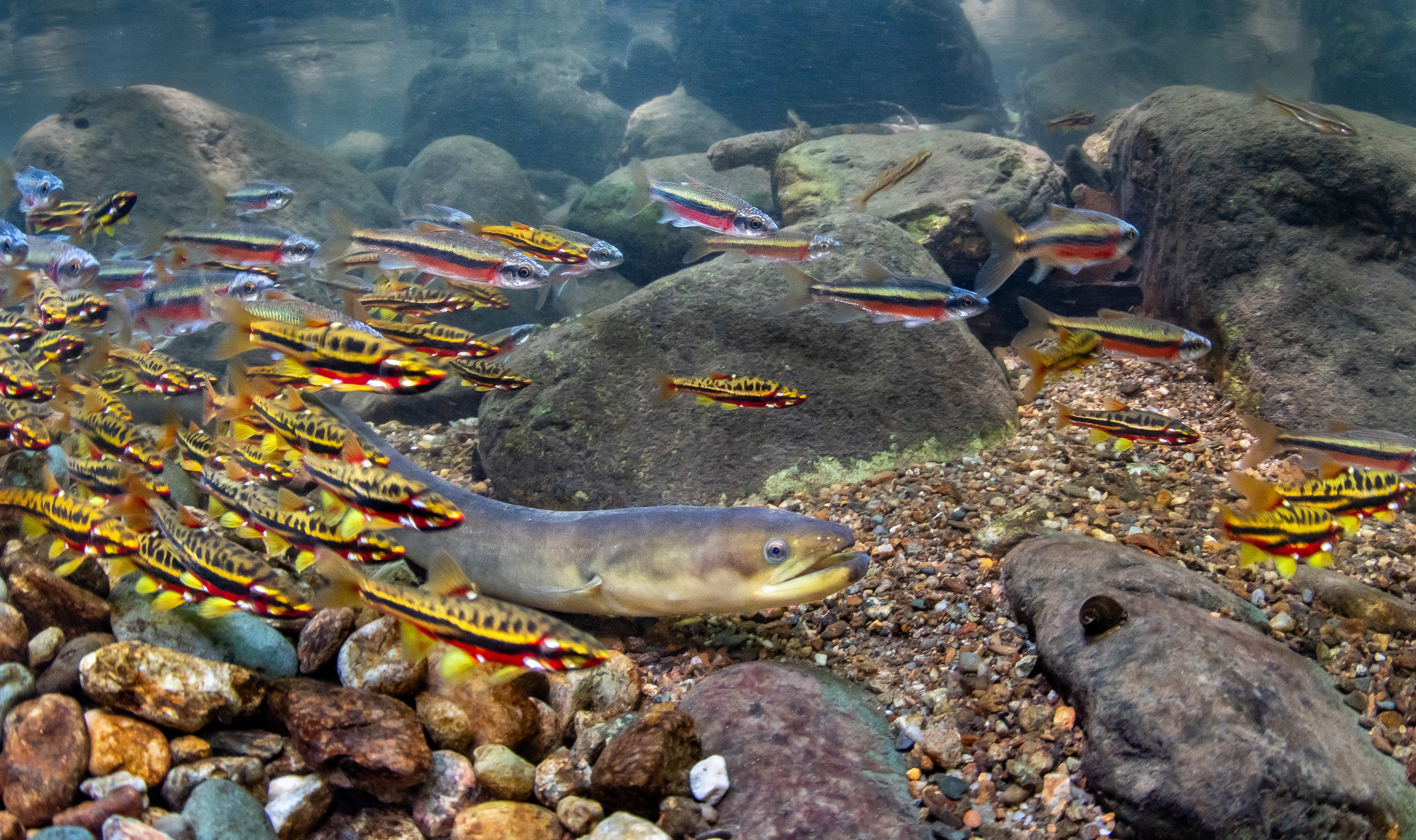
An American eel (Anguilla rostrata) investigates a bluehead chub
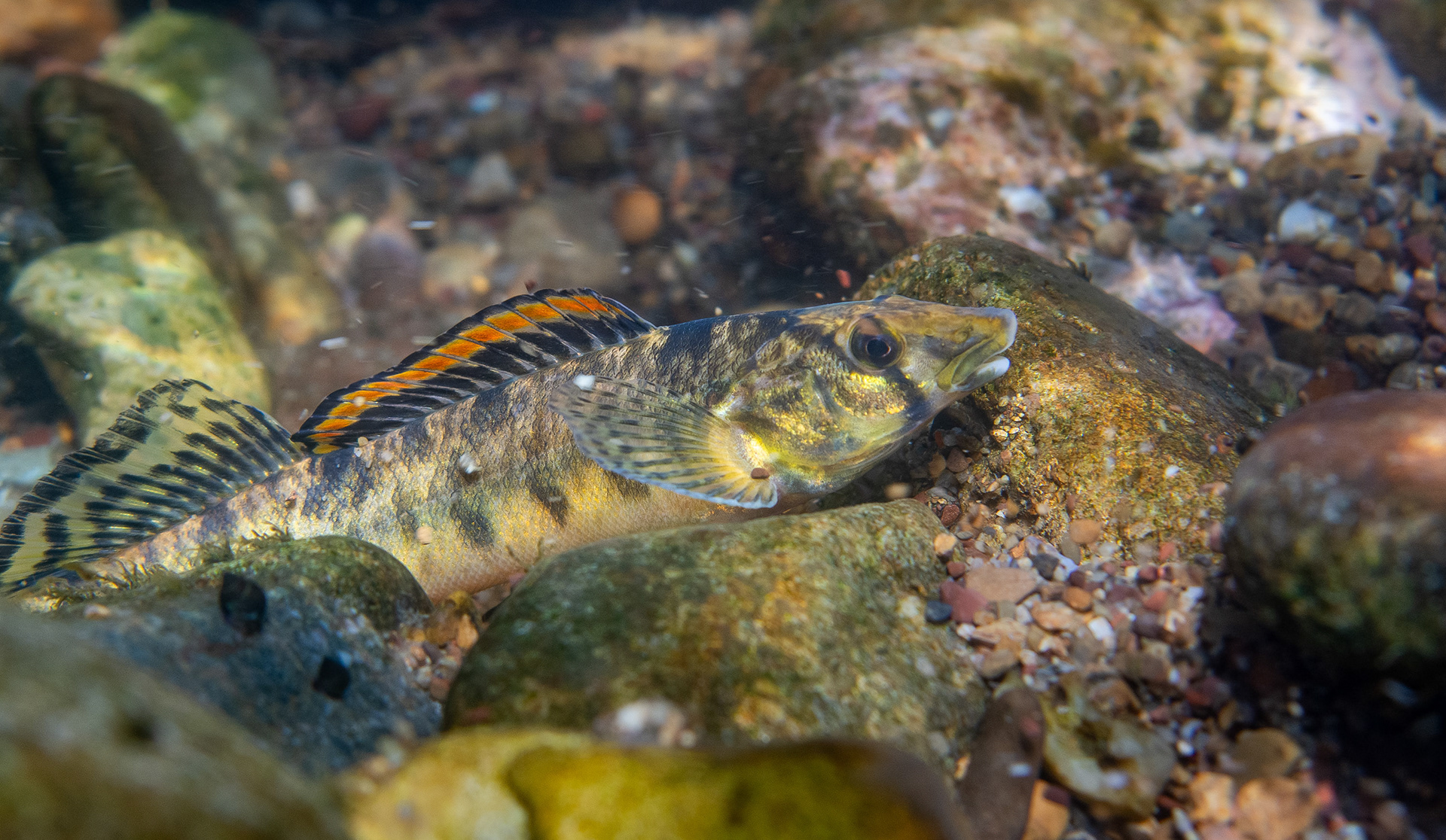
The Roanoke Logperch (Percina rex) is one of Appalachia's greatest conservation success stories. Found only in the Roanoke River basin, it was once federally listed as endangered. It was recently de-listed, following extensive conservation efforts (including captive breeding and habitat management).
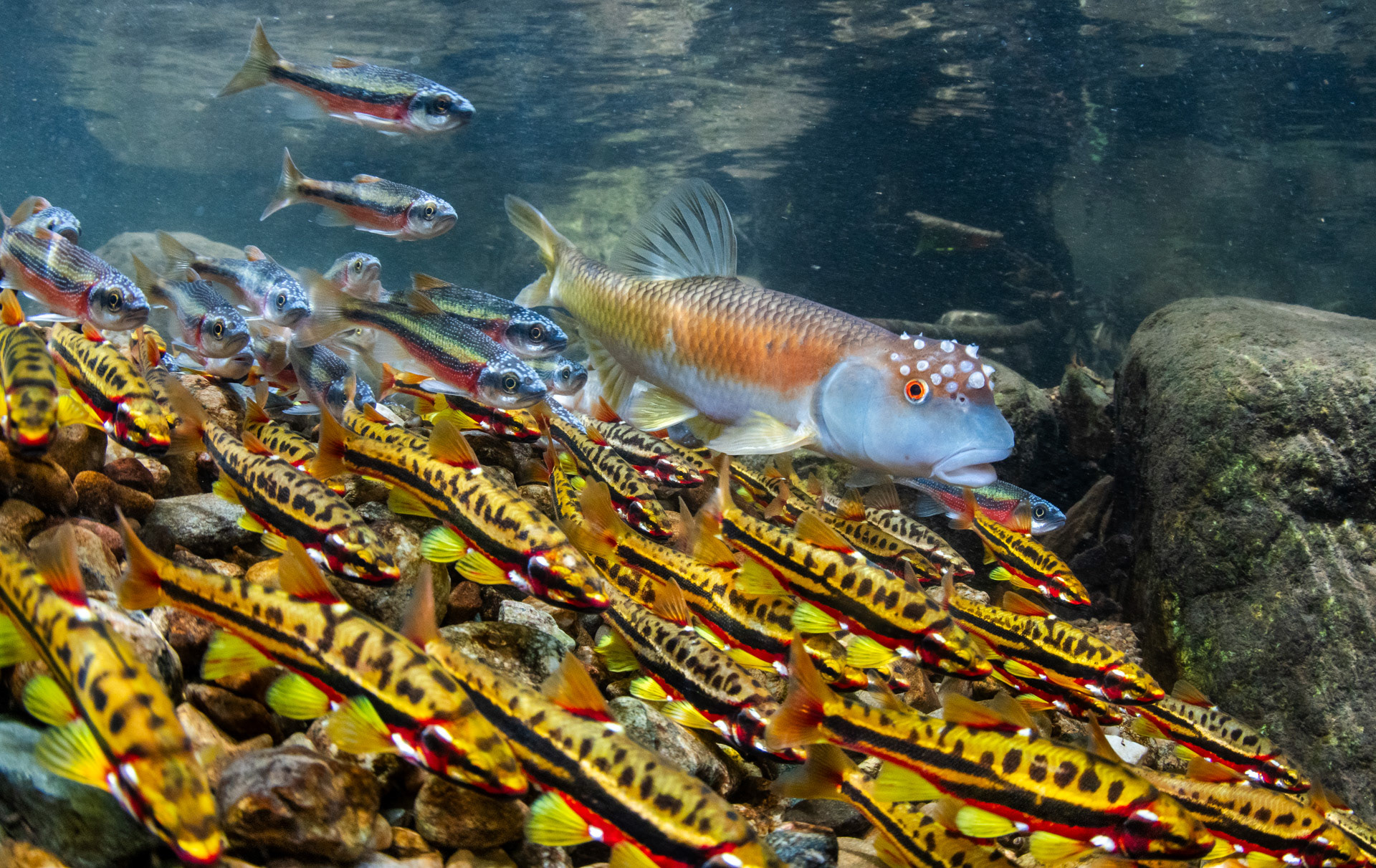
Across much of the southeastern United States, bluehead chub (Nocomis leptocephalus) are an abundant and extremely important species. Each spring, males build large mounds of gravel in which females deposit their eggs. These mounds are such good nesting sites that a large number of other species have adapted to utilize them as well. Here, mountain redbelly dace (Chrosomus oreas) and rosyside dace (Clinostomus funduloides) take advantage of this chub's hard work.
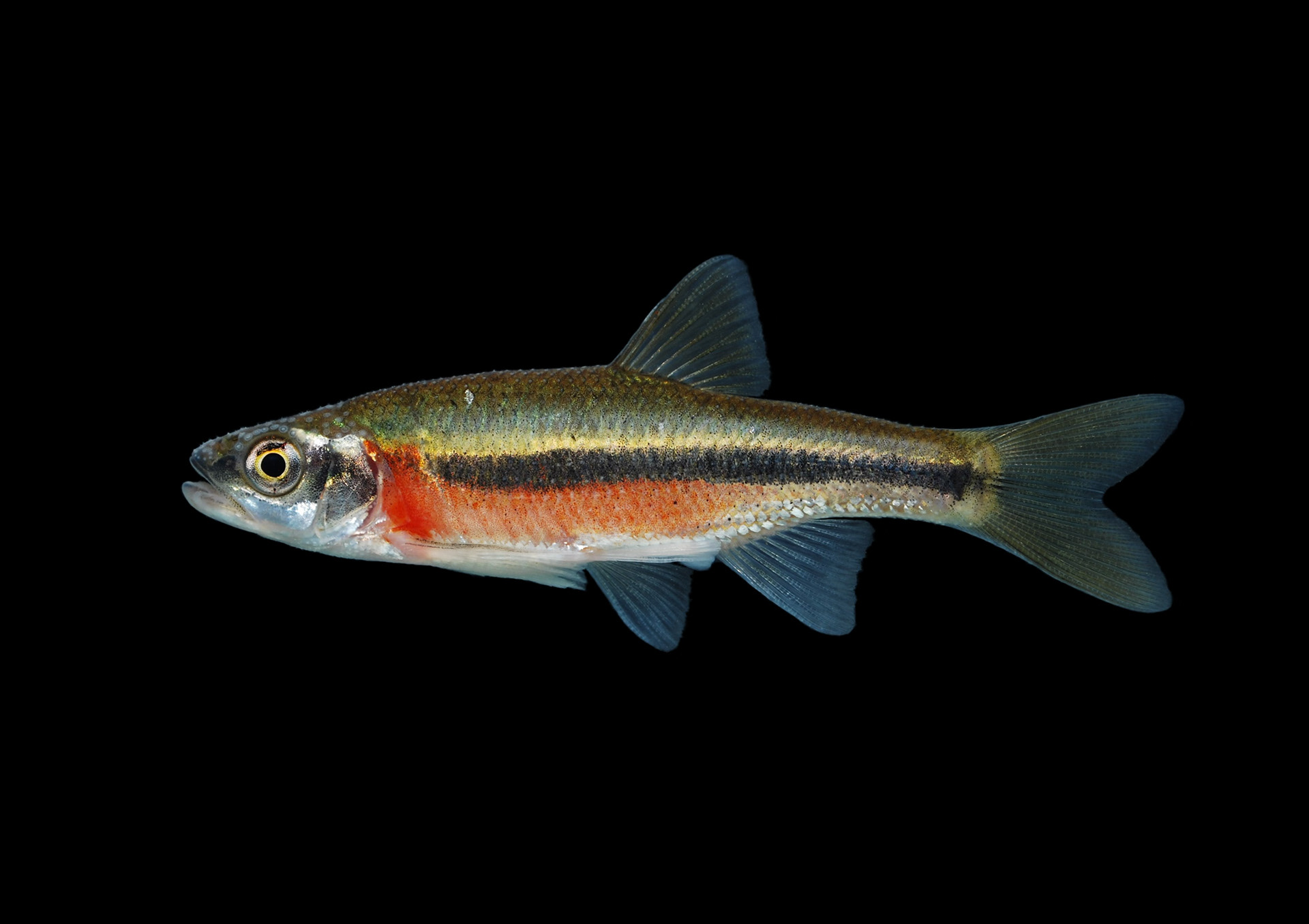
Rosyside dace (Clinostomus funduloides), photographed in the upper James drainage of Virginia.
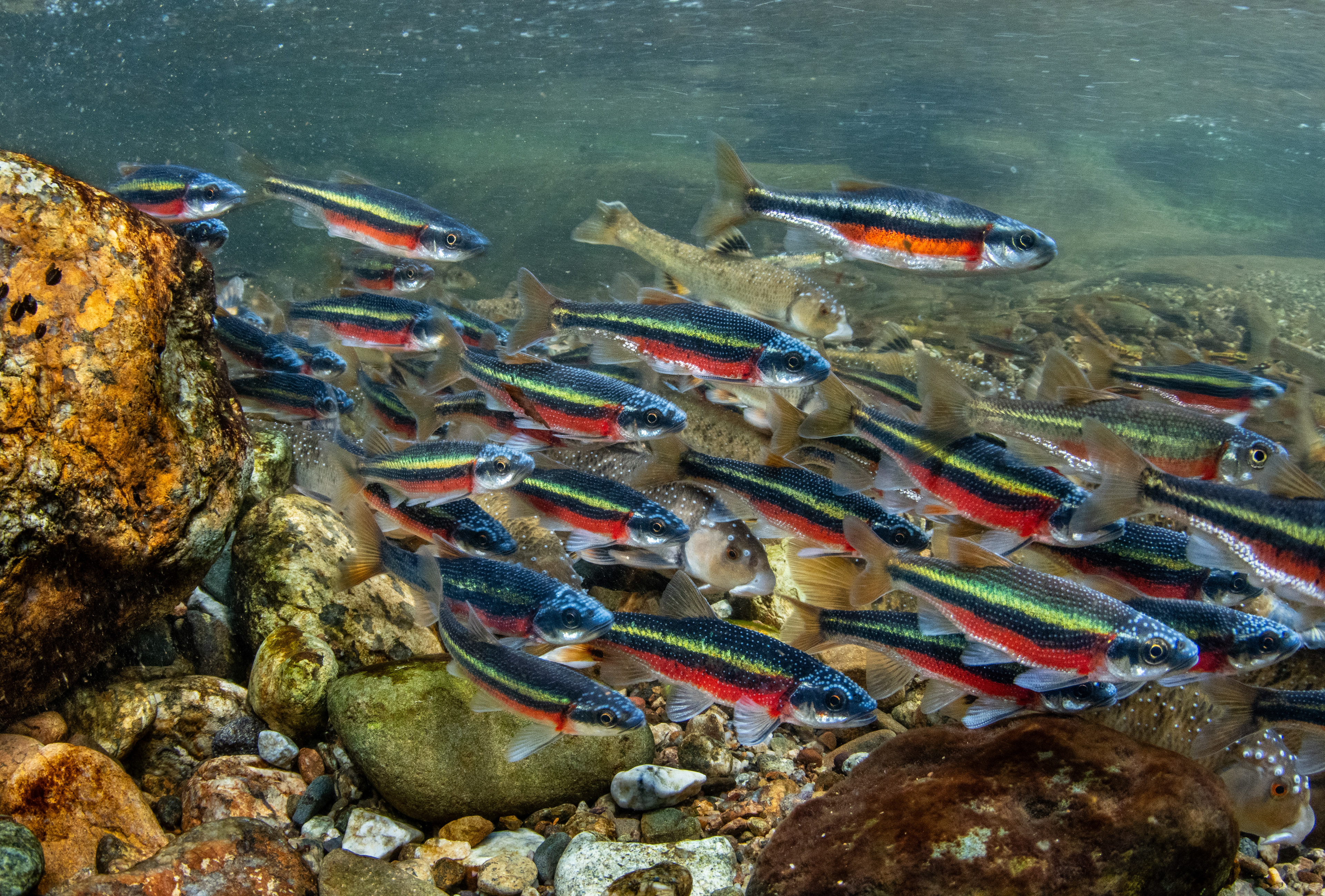
Rosyside dace (Clinostomus funduloides) swarm the nest pits of central stonerollers (Campostoma anomalum), seeking to deposit their eggs alongside the diggers'.,
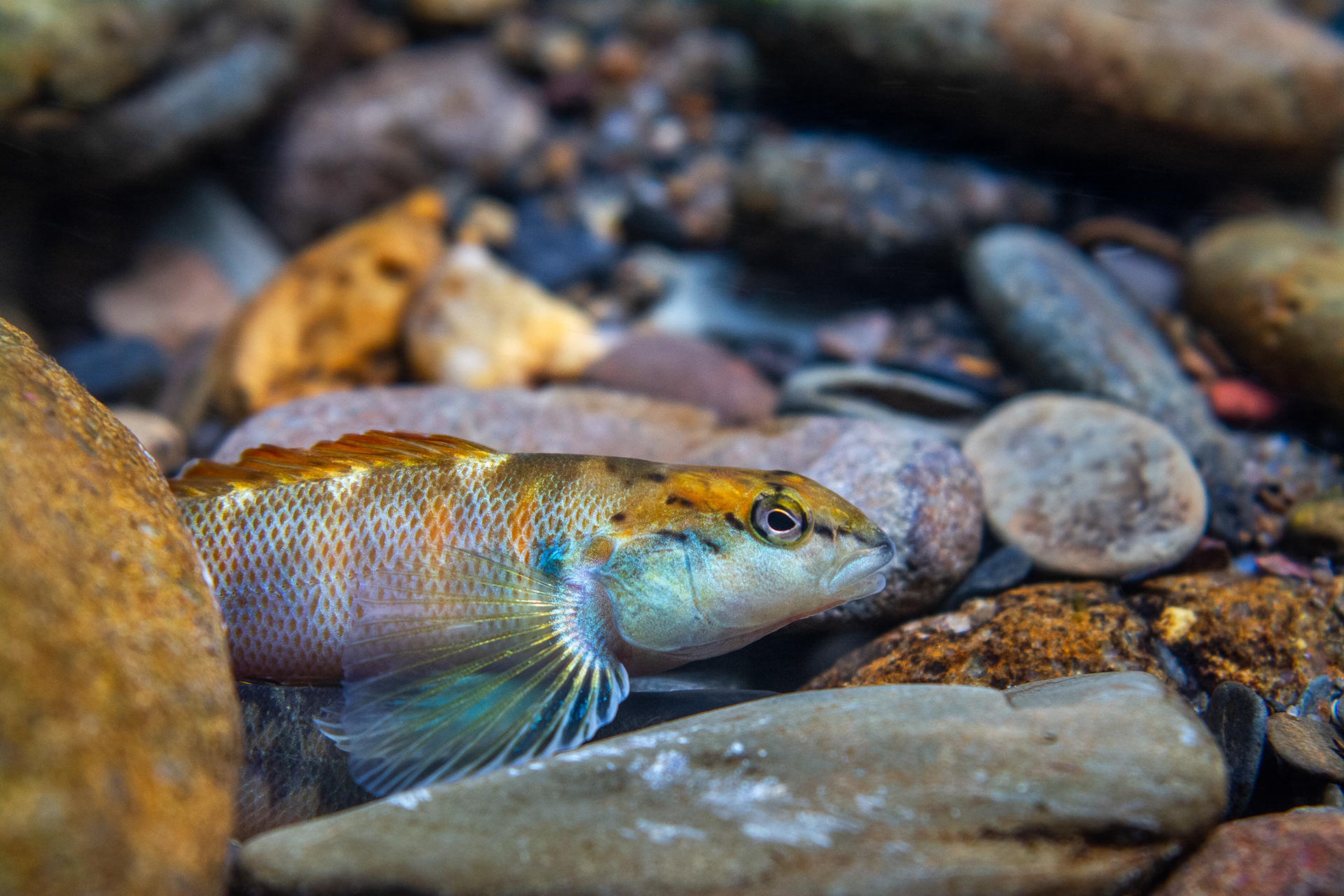
A pair of bronze darters (Percina palmaris) deposit their eggs in the clean gravel of a southeast Tennessee stream.
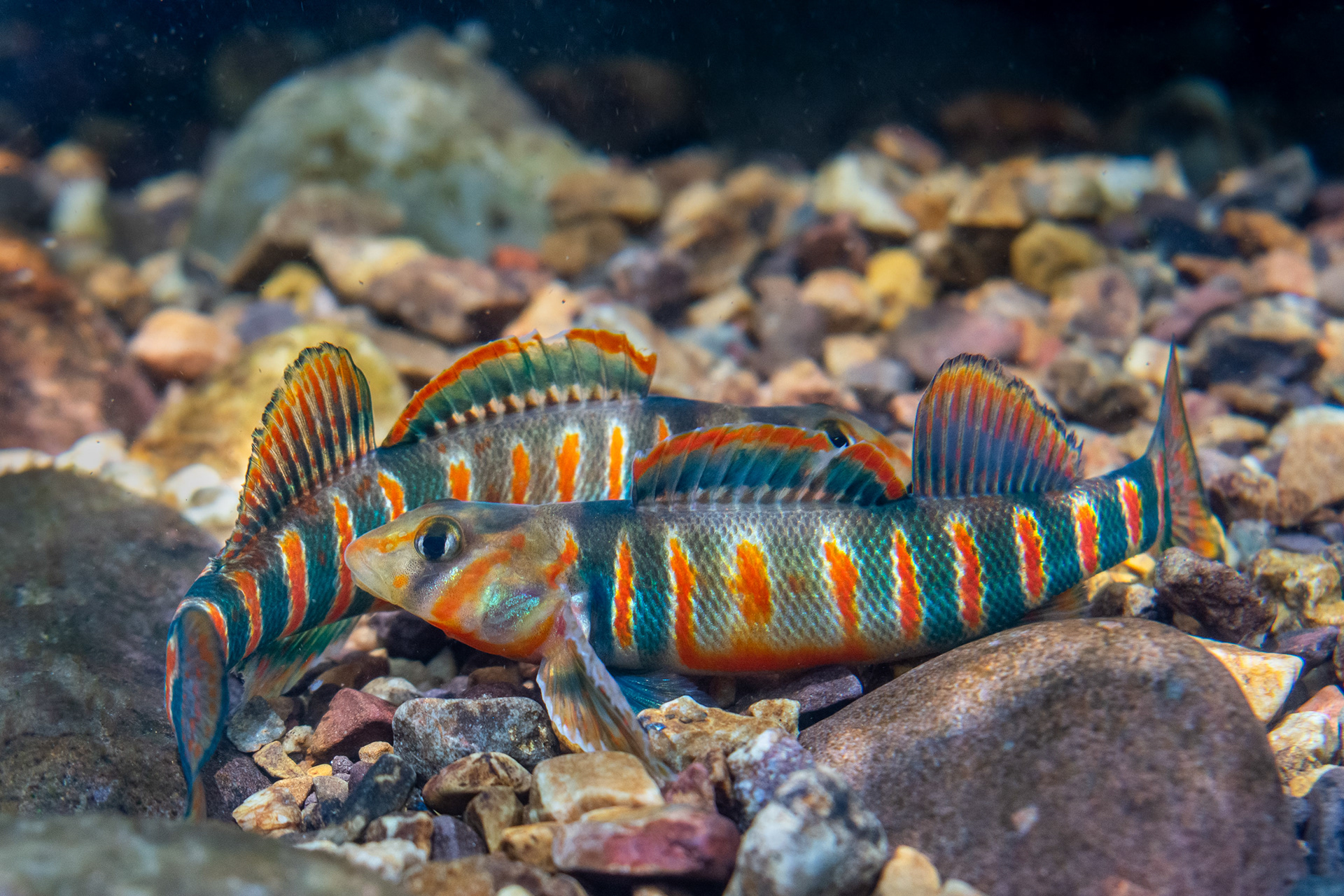
Candy darters (Etheostoma osburni) are federally endangered, making sights like these males' sparring match an increasingly rare sight.
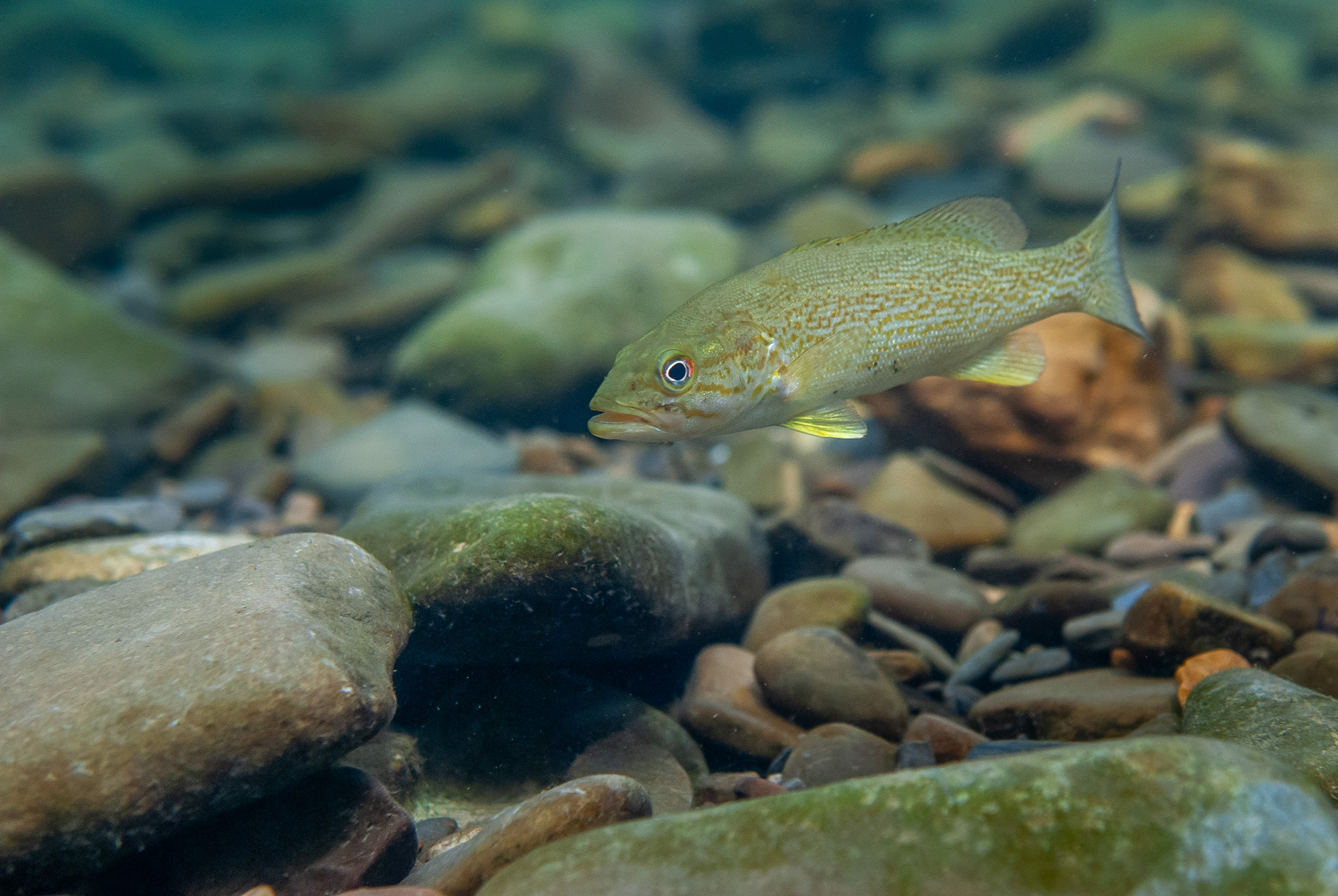
Smallmouth bass (Micropterus dolomieu), a damaging introduced species across much of the southeast.
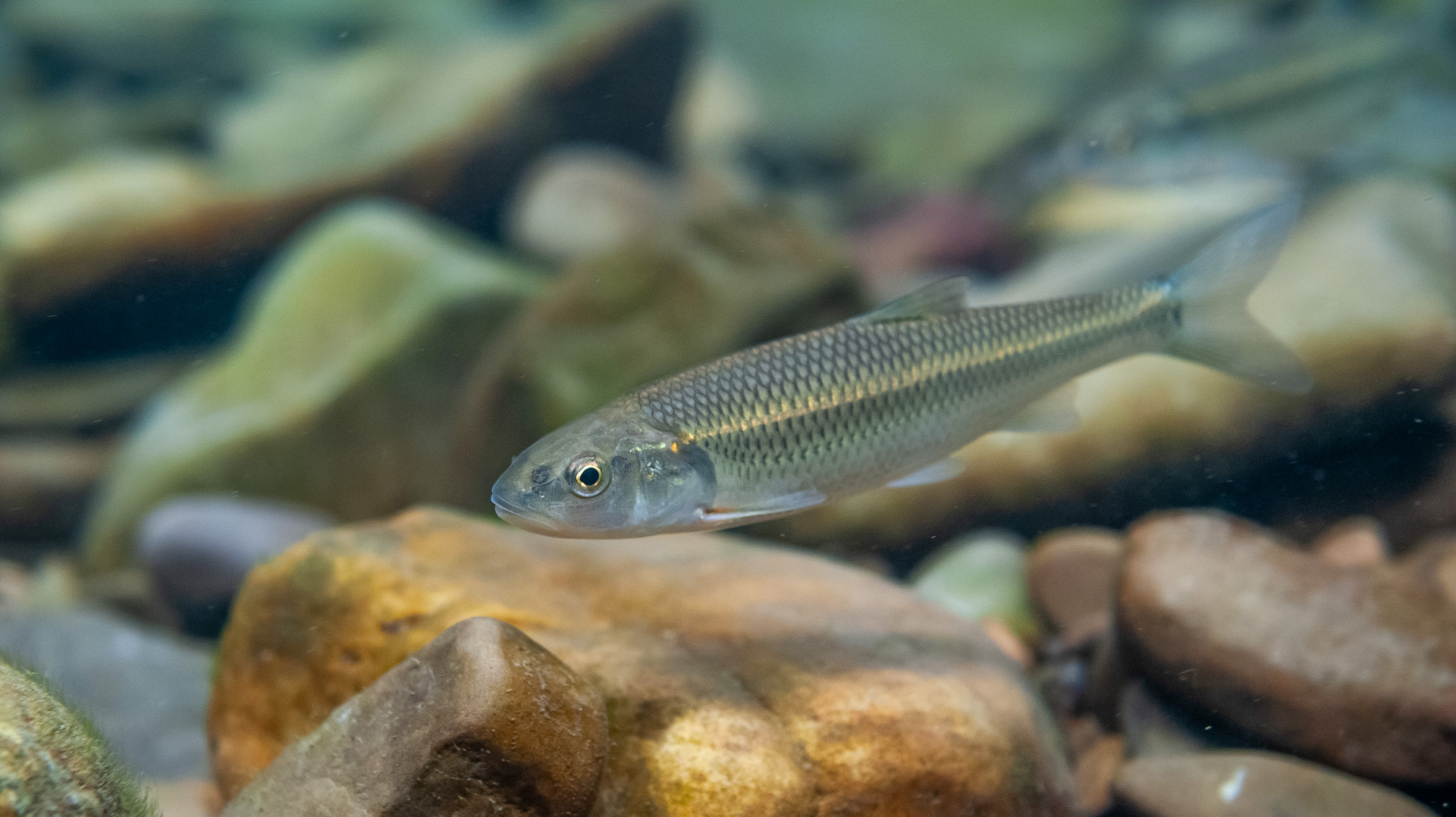
A young fallfish (Semotilus corporalis) eyes the camera in a clear Virginia stream.
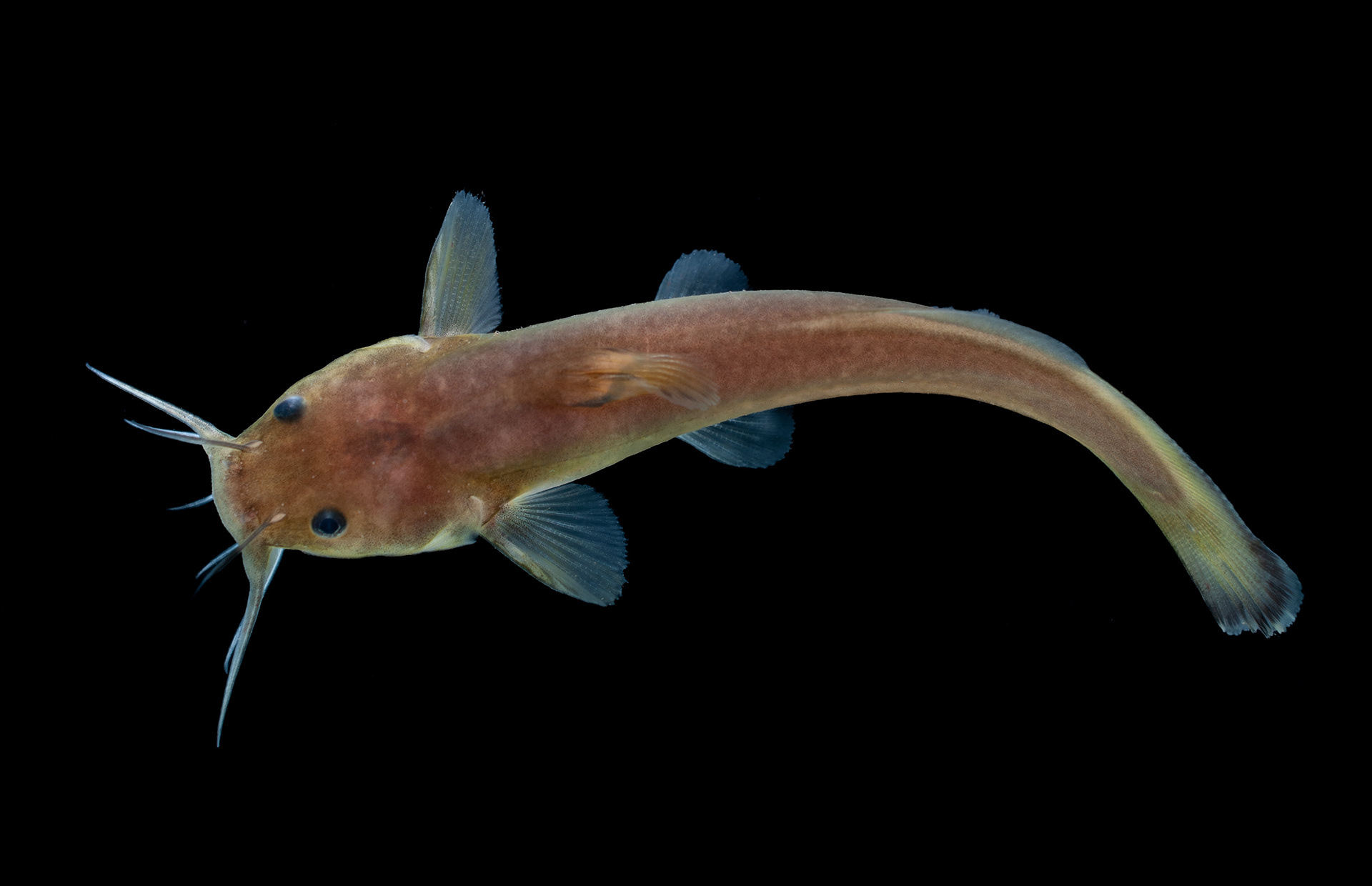
Margined madtom (Noturus insignis)
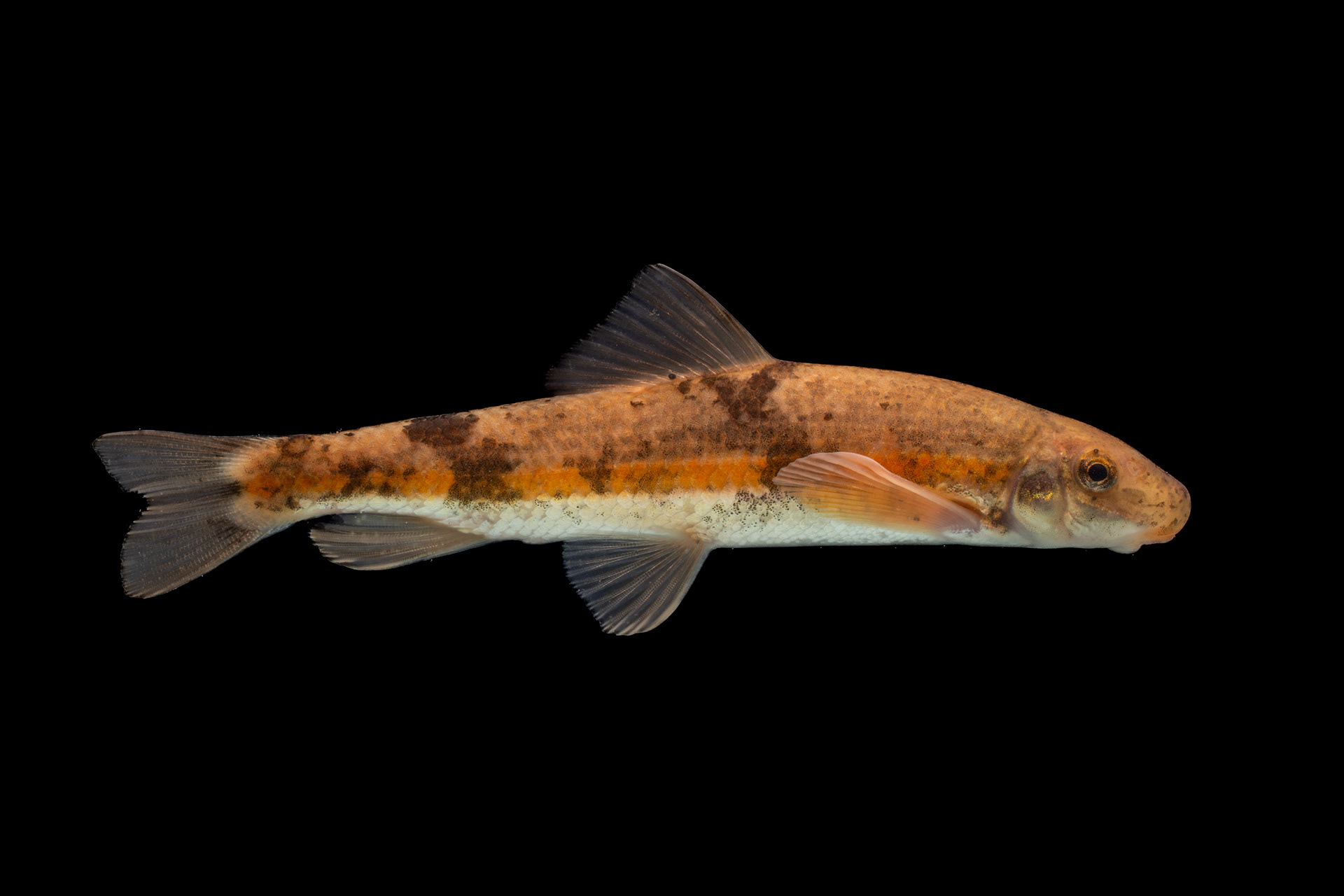
Torrent sucker (Thoburnia rothoeca)